Choosing a sheet metal cutting method isn’t simply a matter of deciding which machine can cut the material.
The right process depends on what you’re making.
Material type, thickness, part geometry, tolerances, edge requirements, production quantity, and downstream operations can all affect which cutting method makes sense.
For an OEM purchasing fabricated parts, understanding those differences can also help explain why two seemingly similar parts may require different manufacturing approaches.
Start with the material
Material is one of the first considerations.
Carbon steel, stainless steel, galvanized steel, and aluminum all behave differently during cutting. Material thickness matters as well.
A process that works efficiently for a relatively thin sheet may not be the best option as thickness increases.
The important question isn’t simply, “Can this material be cut?”
It’s whether the process can produce the required geometry, accuracy, edge condition, and production rate for the job.
Laser cutting
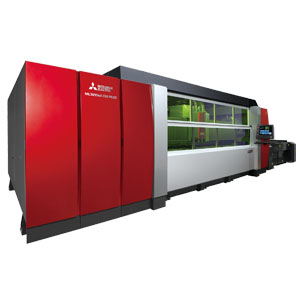
Laser cutting is widely used for sheet metal fabrication because it can produce detailed profiles directly from programmed geometry.
Typical features include:
- Outside profiles
- Holes
- Slots
- Notches
- Vent patterns
- Cable openings
- Tabs and other formed-part features
Laser cutting is particularly useful when a part contains several features that would otherwise require multiple operations.
Because the machine follows programmed geometry, it also works well for repeat production where consistency from part to part matters.
Part geometry matters
Two parts made from the same material and thickness can still have very different cutting requirements.
A simple rectangular panel isn’t the same job as a component containing dozens of holes, narrow slots, ventilation patterns, or an irregular outside profile.
Feature size and spacing should also be considered.
Very small features relative to the material thickness may require additional attention, and holes positioned close to an edge or bend can affect later fabrication operations.
This is one reason the entire part should be reviewed rather than selecting a cutting method based only on material.
Think about what happens after cutting
Cutting is usually only the beginning.
The part may still need to be:
- Bent
- Welded
- Deburred
- Ground
- Finished
- Assembled
- Inspected
The cutting process should support those later operations.
If a cut feature needs to align with a bend, mating component, or piece of installed hardware, dimensional consistency becomes especially important.
Likewise, the required edge condition may depend on whether the edge will remain visible, be welded, or disappear inside an assembly.
Production quantity
Volume can also affect the manufacturing approach.
Prototype and low-volume work may prioritize flexibility and quick setup. Repeat production may place greater emphasis on cycle time, nesting efficiency, consistency, and reducing secondary operations.
A good cutting strategy therefore considers more than the first batch.
If the part is expected to become an ongoing production item, the process should be capable of supporting that requirement consistently.
Tolerances
Not every dimension needs the same tolerance.
Tighter tolerances can increase manufacturing and inspection requirements, so drawings should distinguish between dimensions that are critical to the function of the part and dimensions where normal fabrication tolerances are acceptable.
This becomes particularly important when cut features must align with hardware, formed features, or mating components.
Don’t choose the process in isolation
One of the easiest mistakes is treating cutting as an independent step.
A fabrication shop looks at how the cut blank will move into bending, welding, finishing, and assembly.
Sometimes a minor adjustment to the flat pattern can simplify a later operation considerably.
That is why discussing the complete part with the fabricator is often more useful than specifying a cutting process without considering the rest of production.
The bottom line
There isn’t one sheet metal cutting method that’s automatically right for every job.
The best approach depends on the material, thickness, geometry, tolerances, volume, edge requirements, and what happens to the part after it’s cut.
HFI Manufacturing provides sheet metal cutting as part of its broader fabrication capabilities, supporting parts that move from cutting into forming, welding, finishing, and assembly.
Talk to HFI about your sheet metal cutting requirements or call (630) 293-9300 to discuss your project.