As data center equipment gets more powerful, rack design has to account for more than just how much equipment will fit inside a cabinet. Higher rack densities bring higher heat loads, heavier equipment, more cabling, and greater demands on airflow.
Similar considerations apply to telecommunications equipment and network infrastructure, where enclosures need to protect sensitive equipment while providing adequate ventilation, cable management, and access for installation and maintenance.
For OEMs designing racks, cabinets, and telecom enclosures, these requirements need to be considered early in the design process. Structural strength, airflow, cable management, and installation all have to work together.
Here’s a look at some of the fabrication considerations that go into data center racks, cabinets, and telecom enclosures.
Higher density means more demands on the enclosure
As power and equipment density increase, the enclosure has to support more weight while helping manage the heat generated by that equipment.
That can affect several parts of the design, including:
- Power distribution: Higher-density racks may require larger PDUs, additional cabling, or busway connections.
- Airflow: Front and rear doors or enclosure panels may need greater venting to support the required airflow.
- Structural strength: Frames, mounting rails, and panels need to be designed for the expected equipment load.
- Clearances: Cable routing, airflow paths, and equipment access all need to fit within the available space.
These requirements are much easier to address when they’re considered during the initial design rather than added later in the fabrication process.
Structural design: supporting the load
A fully populated data center rack can carry a significant amount of equipment. The frame and mounting structure need to handle that load while maintaining dimensional stability during installation and use.
Telecom enclosures can have their own structural requirements depending on where they’re installed and what equipment they need to house. Wall-mounted, floor-mounted, and outdoor enclosures may require different approaches to material thickness, mounting points, reinforcement, and environmental protection.
A few fabrication details are especially important.
Material thickness should be selected based on the required load and the design of the enclosure. Using bends, flanges, ribs, and other formed features can also add rigidity without simply increasing material thickness throughout the entire cabinet.
Welding needs to provide consistent structural joints across the production run. Depending on the component and finish requirements, manufacturers may use MIG, robotic welding, TIG, or other processes.
Panel and door construction also affects rigidity. Properly designed bends and formed edges can help prevent panels from flexing while keeping the overall enclosure weight under control.
The right approach depends on the enclosure’s intended load, dimensions, materials, and application—not simply on using a heavier gauge everywhere.
Airflow and cooling
Cooling becomes increasingly important as rack density increases. The goal is to move air where it’s needed rather than allowing it to bypass the equipment.
For many data center environments, that means paying close attention to the cabinet’s doors, panels, openings, and internal air paths.
Telecom equipment can have similar cooling requirements. Depending on the application, an enclosure may use ventilation openings, fans, filters, or other air-management features to help maintain the appropriate operating environment.
Vent patterns and open area
The size, location, and pattern of ventilation openings can affect airflow through the enclosure. Louvers, perforations, and other openings can be incorporated into the sheet metal during fabrication.
Laser cutting can be useful for producing repeatable vent patterns and custom openings, particularly when a design calls for a specific pattern or open area.
Front and rear doors
Door design is another important consideration. Ventilation coverage, grille orientation, and the amount of open area can all affect how air moves through the cabinet.
The right configuration will depend on the equipment, cooling strategy, and requirements of the installation.
Air management components
Cooling isn’t limited to the cabinet itself. Components such as blanking panels, cable brush strips, fan trays, filters, and containment baffles can all play a role in managing airflow.
Including these components in the overall design can make installation easier and help ensure that the finished system works as intended.
Designing around the 19-inch EIA standard
Many server, networking, and telecommunications racks are designed around the 19-inch EIA-310 standard, which defines key dimensions for rack-mounted equipment, including mounting dimensions and rack unit spacing.
Dimensional accuracy matters here. Even a relatively small variation in mounting locations or clearances can create problems when standard equipment and rails are installed.
HFI fabricates components designed around EIA-310 dimensions, with CNC cutting and forming processes helping maintain consistent dimensions from one unit to the next. That consistency becomes especially important when racks, cabinets, or related components are being produced in larger quantities and installed across a facility.
Cable management, power, and equipment integration
Modern data center and telecommunications enclosures have to accommodate much more than the equipment itself.
Cable routing, power distribution, and other infrastructure can take up a significant amount of space inside and around the enclosure. Designing these features into the cabinet from the beginning can reduce the need for modifications during installation.
Common considerations include:
- Cable management: Vertical and horizontal pathways sized for the expected cable volume.
- PDU and busway mounting: Attachment points incorporated into the cabinet or frame where required.
- Equipment mounting: Rails, brackets, shelves, and other mounting features designed around the equipment being installed.
- Grounding: Appropriate bonding points where required.
- Equipment access: Sufficient space to install, remove, and service components.
Whenever possible, these features should be included in the fabrication drawings rather than left for installers to modify in the field.
Materials and finishes
Material selection depends on the enclosure’s structural requirements, environment, weight considerations, and cost.
| Material | Common applications |
|---|---|
| Cold-rolled steel | Rack and cabinet structures |
| Galvanized steel | Cable management and support components |
| Aluminum | Lightweight cable management and cooling components |
| Stainless steel | Applications where corrosion resistance is important |
The finish also matters, particularly for cabinets and enclosures that will be installed in large numbers.
Powder coating provides a durable, consistent finish and can be specified in standard colors or custom colors where required. Other finish requirements may apply depending on the environment and application.
For telecom and other outdoor applications, the enclosure design and finish may also need to account for exposure to moisture, temperature changes, dust, and other environmental conditions.
Fabrication considerations
Once the design is finalized, the manufacturing process has to produce the same result consistently across the production run.
Typical fabrication processes for data center racks, cabinets, and telecom enclosures can include:
- Laser cutting for vents, mounting holes, cable openings, and other features.
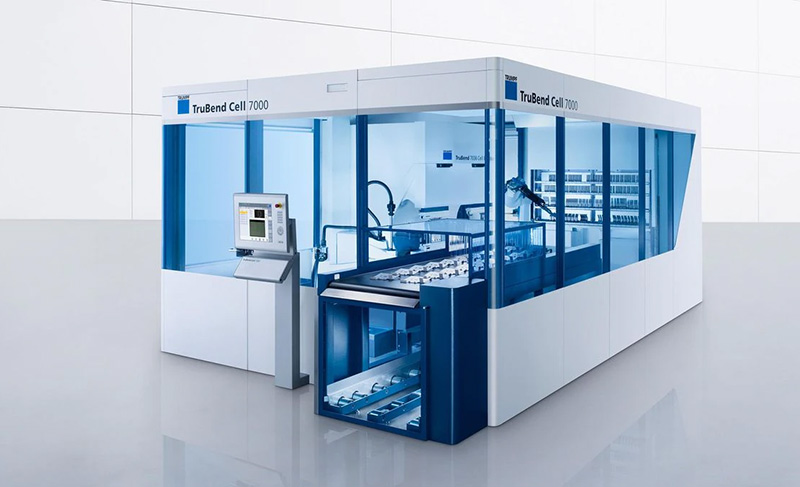
- CNC press brake forming for frames, panels, brackets, flanges, and other formed components.
- Welding for structural assemblies and frames.
- Inspection and quality control to verify critical dimensions, interfaces, and other customer requirements.
First article inspection can also be useful when moving a new rack or enclosure design into production. It provides an opportunity to verify the fabricated parts against the drawings before the full production run begins.
The bottom line
Data center racks, server cabinets, and telecom enclosures all have to balance structural requirements, equipment compatibility, airflow, cable management, and installation needs. As equipment becomes more powerful and infrastructure becomes more complex, those considerations become even more important.
For manufacturers and OEMs, bringing fabrication considerations into the design process early can help avoid problems later—whether that’s an equipment mounting issue, insufficient airflow, difficult cable routing, or an enclosure that needs field modifications.
HFI Manufacturing works with OEMs on fabricated racks, cabinets, telecom enclosures, and related components for data center and telecommunications applications. Our capabilities include laser cutting, CNC forming, welding, finishing, and assembly, with quality processes supported by our ISO 9001-certified facility.
Talk to HFI about your rack, cabinet, or enclosure program or call (630) 293-9300 to discuss your requirements.